
By Sasha Lamadrid, education manager
Throughout recorded history, stories of fantastical creatures have captured our imagination and helped us make sense of the unexplained. While some tales are unique to specific cultures, others appear across place and time, seemingly independent but sharing common threads.
Inspired by our October events Howl-O-Ween at The Wolf–Fantastical Creatures and Into the Stacks: Werewolf(sonian)—we went digging for beasts and beings in the collection. Here, we've narrowed it down to our favorite types.
Dragons
Dragons appear across cultures worldwide, often identified as hybrid creatures possessing reptilian and avian traits. Over time, and through the mixing of cultural ideas, the four-legged, flying, fire-breathing menace became so well known that it has spawned some of the greatest literary, television/film, and gaming narratives of all time.
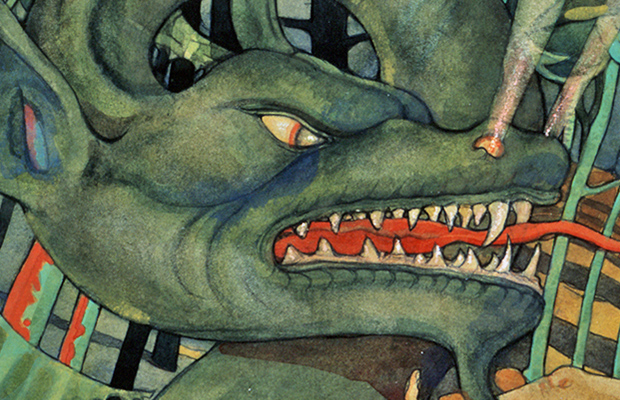
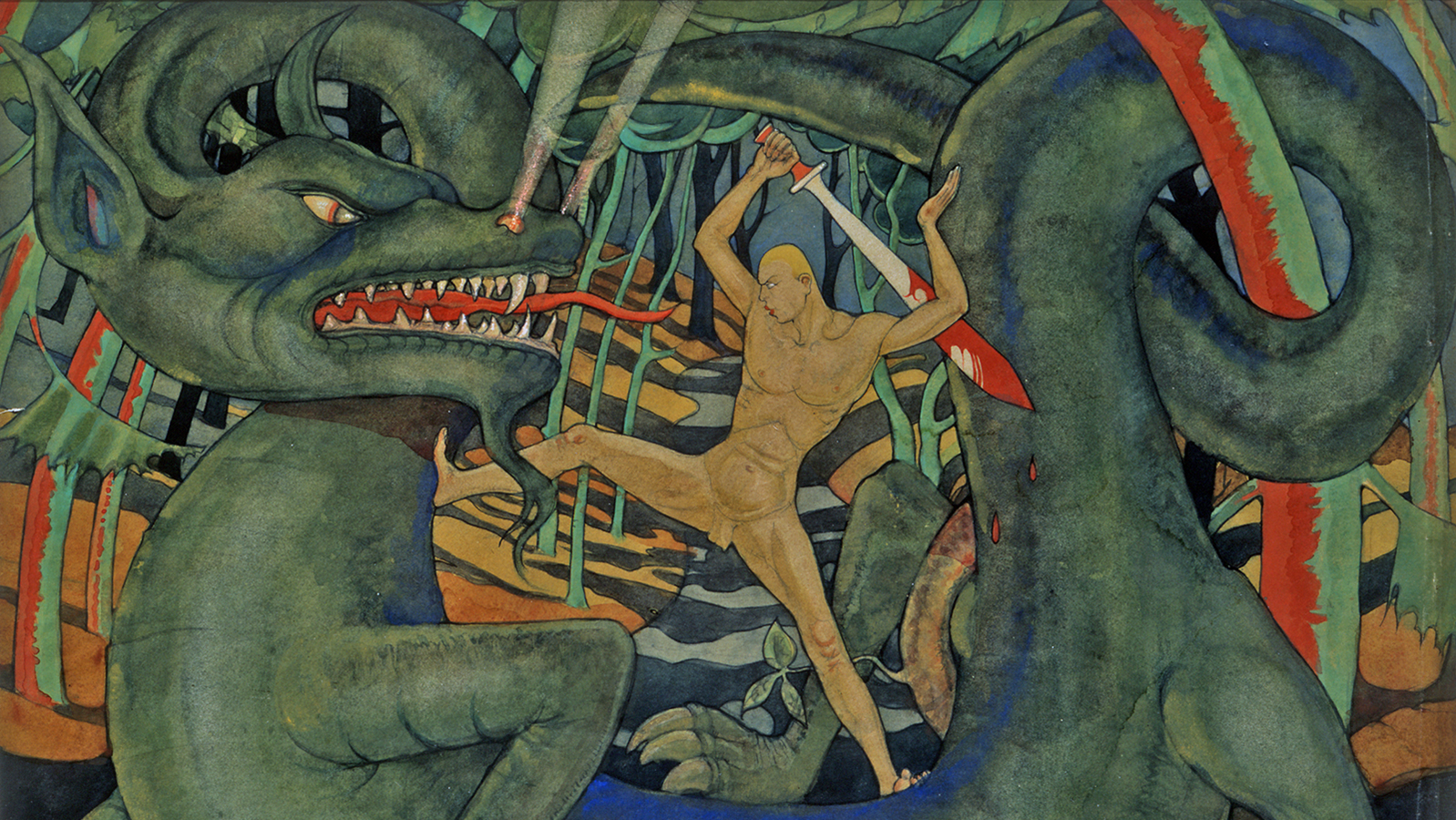
In East Asia, dragons appear more serpentine, without wings, and are seen as a mostly benevolent force that can harness the power of nature to benefit or—when provoked—destroy society. In contrast, dragons in Western and Middle Eastern cultures are often evil, representing greed and gluttony—a villain that society must vanquish. Dragon Slayer by Albert Wainwright and a bronze sculpture of a triumphant knight standing over a slain dragon by August Kraus perfectly illustrate the dragon as a formidable foe, a trope echoed in tales of dragons hoarding treasure, staking claim to their territory, and requiring sacrifices. There is also a repeating motif of them being an obstacle in a hero's journey.
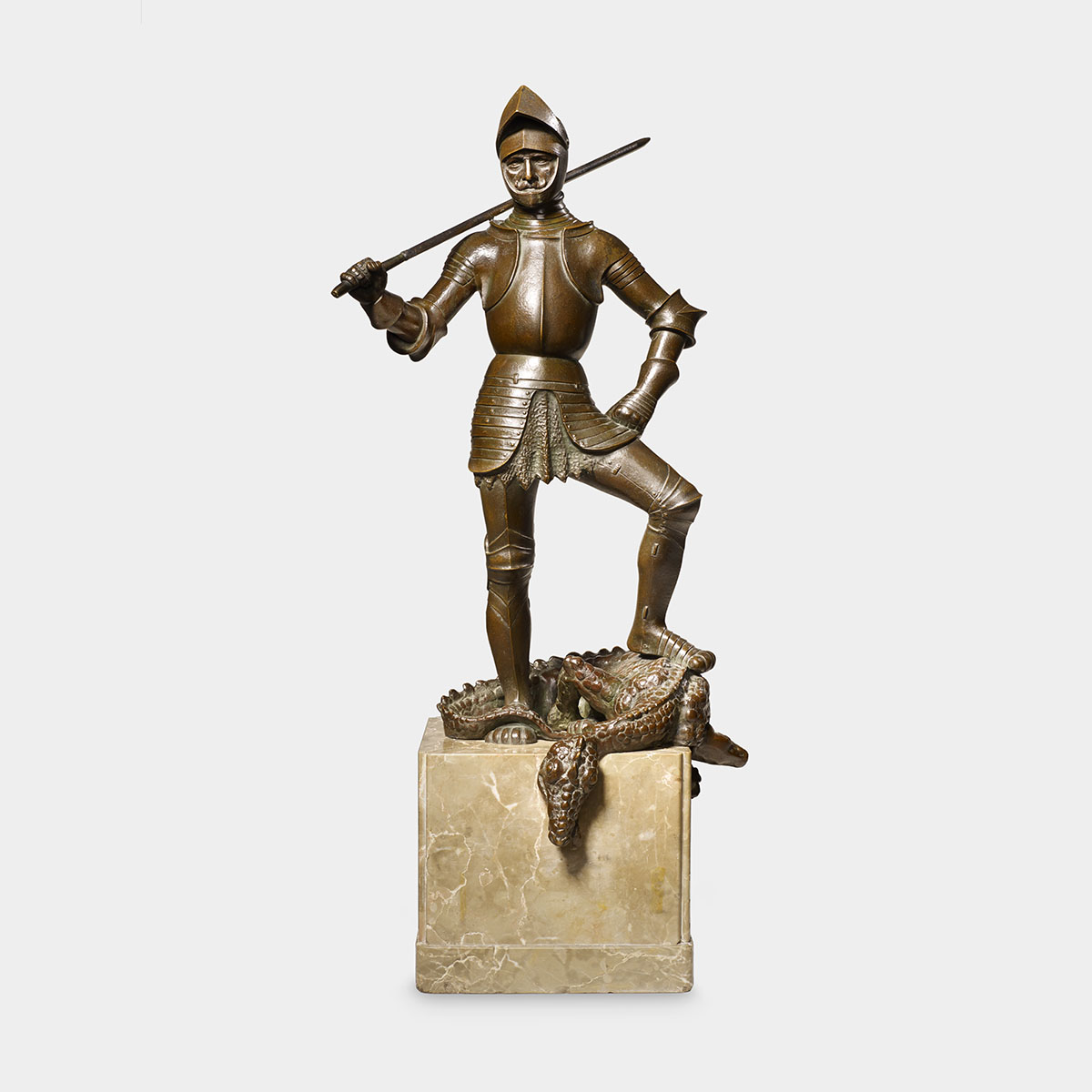 Sculpture, 1916
August Kraus (German, 1868–1934)
Germany
Bronze, marble
The Wolfsonian–FIU, The Mitchell Wolfson, Jr. Collection of Decorative and Propaganda Arts, Promised Gift, WC2003.9.30.1
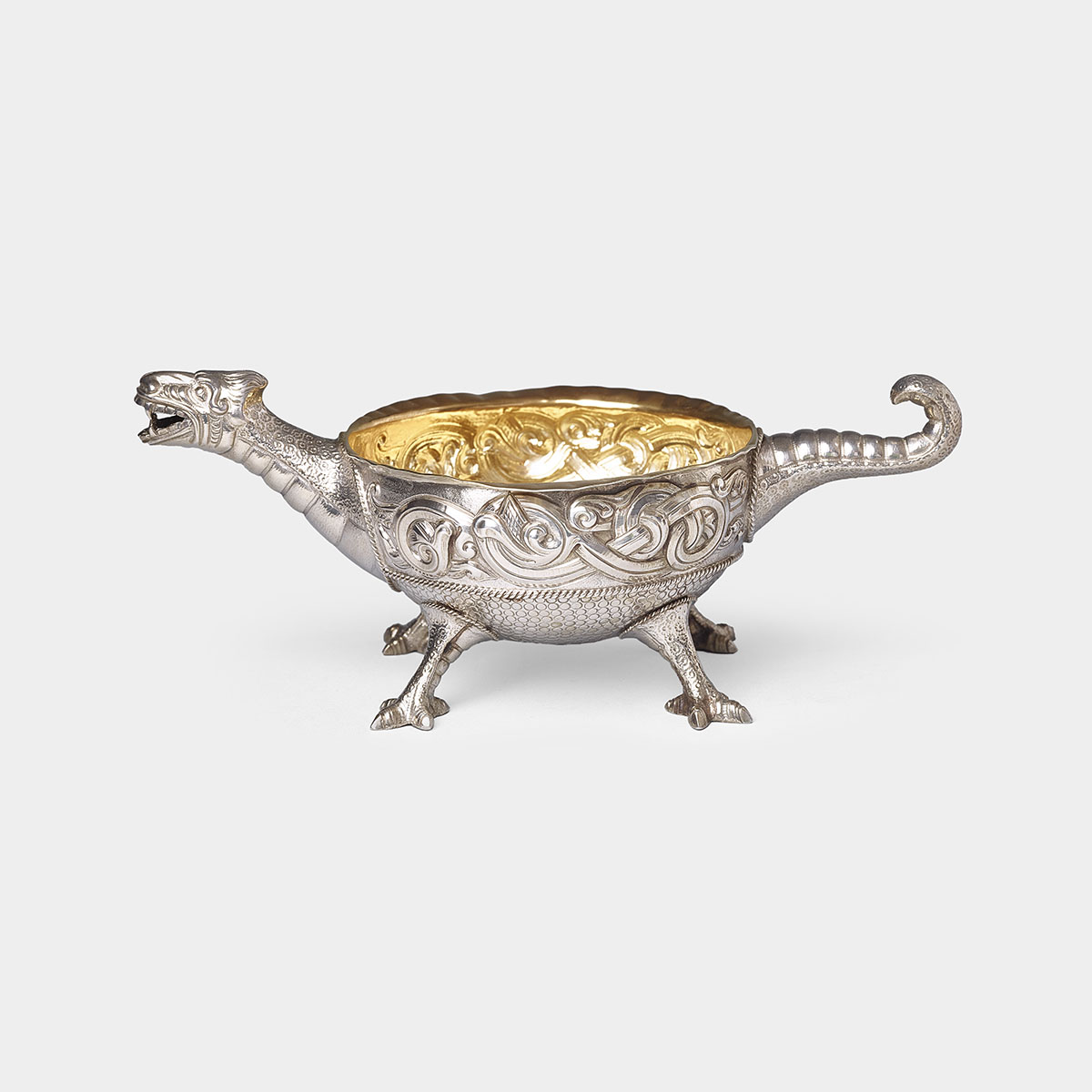
Bowl, c. 1900
Henrik Møller (Norwegian, 1858–1937), silversmith
Trondheim, Norway
Sterling silver, gilt
The Wolfsonian–FIU, Gift of Historical Design, New York City, 2021.25.95
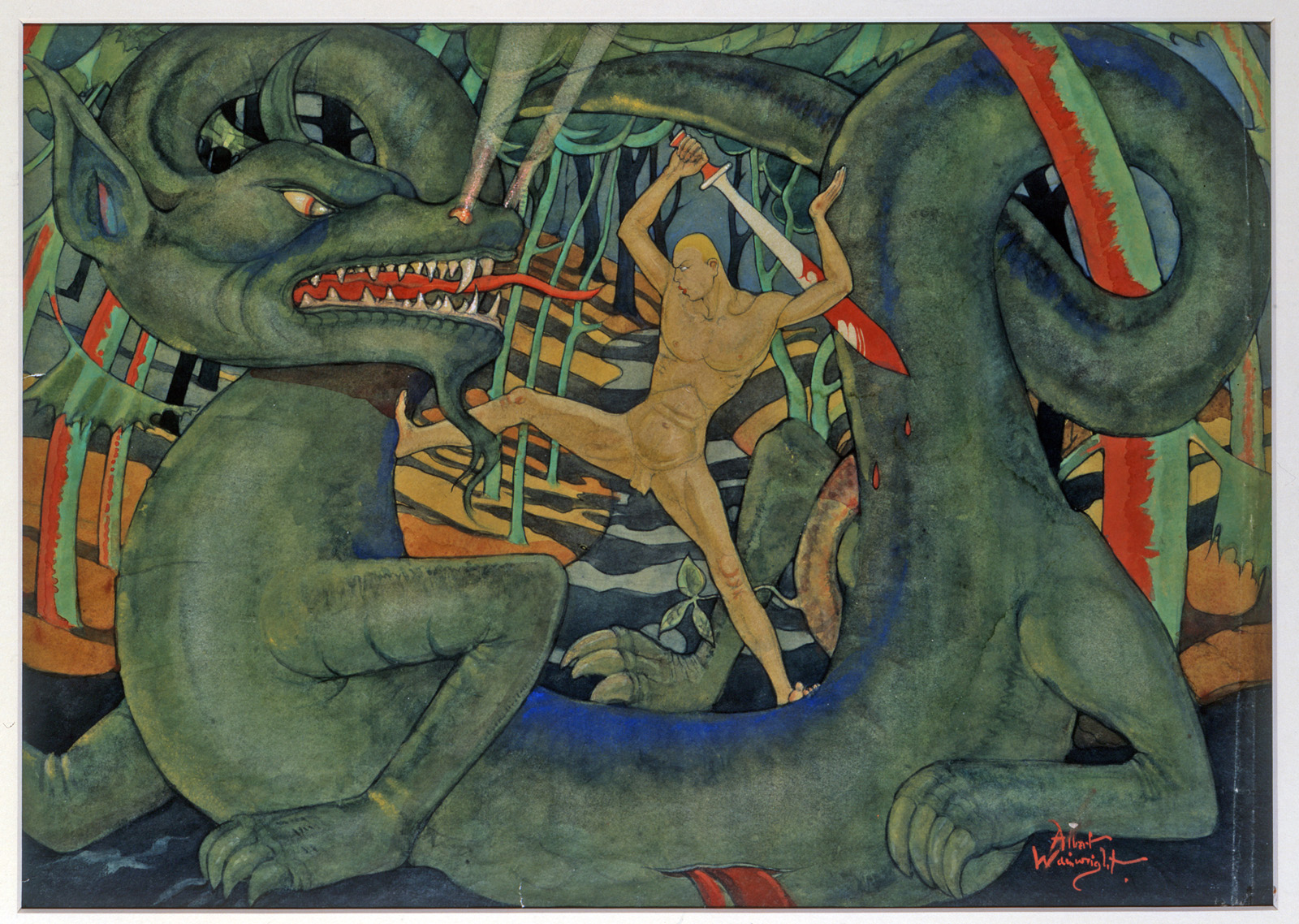 Painting, Dragon Slayer, c. 1927–38
Albert Wainwright (British, 1898–1943)
Great Britain
Gouache on paper
The Wolfsonian–FIU, The Mitchell Wolfson, Jr. Collection, 87.786.5.1
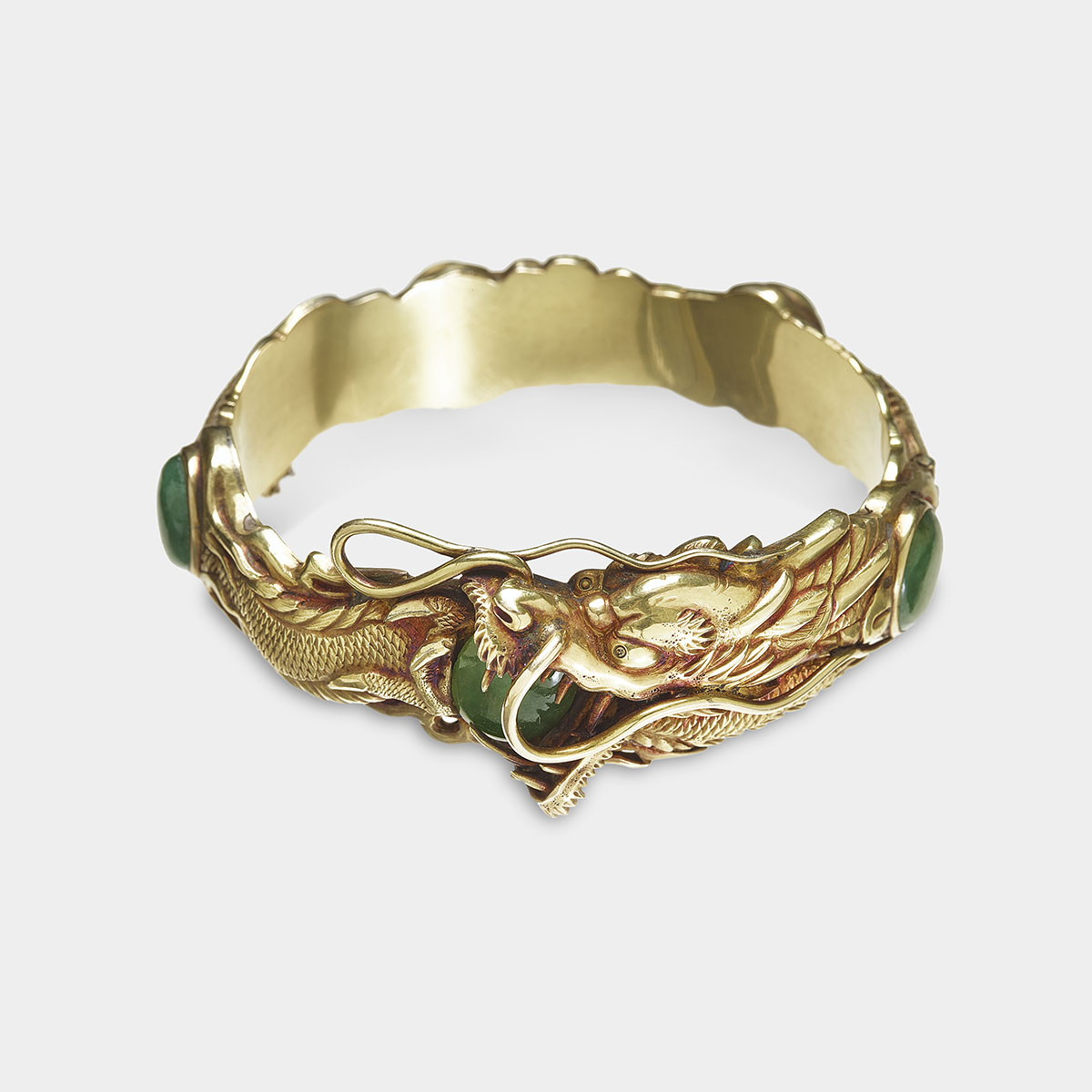
Bracelet, c. 1900
Samurai Shokai, Yokohama, Japan, retailer
Gold, jade
The Wolfsonian–FIU, Gift of Historical Design, New York City, 87.786.5.1
Merfolk
Alongside the Kraken, Leviathan, and Scylla, merfolk have been thought to roam the open waters. The half-human, half-fish beings we're familiar with today had a much less glamorous reputation in ancient times. Greek sirens, bird-women who lured sailors to their deaths with enchanting songs, were a fearsome presence associated with danger, rough weather, drowning, and shipwrecks. Yet, other ancient tales of human-fish hybrid creatures, like that of the kulullû in 3rd-millenium BCE Babylonia, considered them positive, protective beings. The terms "siren" and "mermaid" were used interchangeably in later periods to refer to fish-tailed merfolk.
In modern times, mermaids epitomize beauty and feminine ideals. Julius Klinger's mermaid illustrations depict sinuous, nude female figures sensuously posed among fish and seagrass. Other artists, like Romeo Berardi, imagine merfolk as more creature-like. A bowl in the collection, for example, shows a merman with fish-like fins and lips, holding a pile of beads like treasure—evoking the trope of the territorial sea creature hoarding treasure from sunken ships.
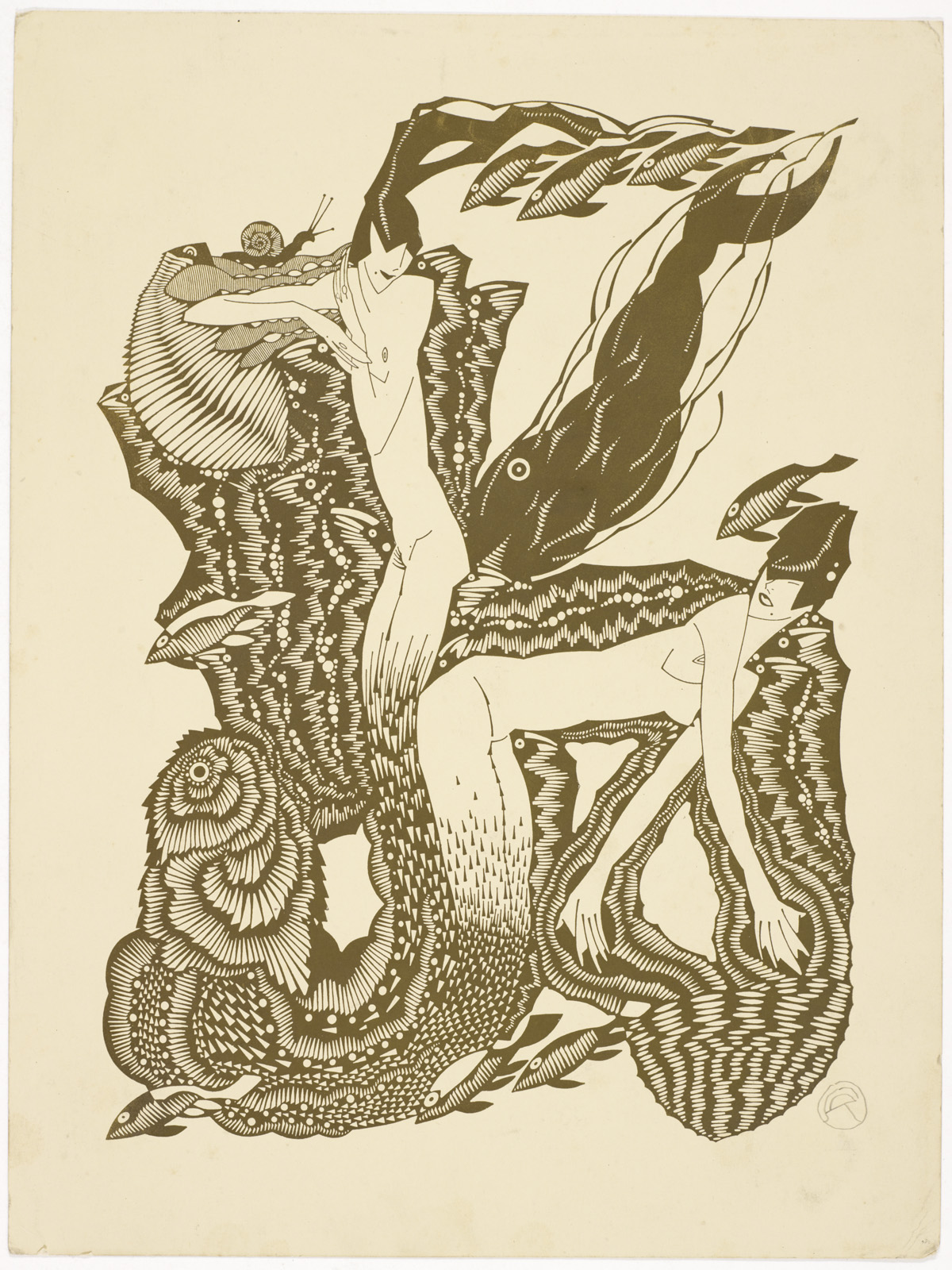 Print, Seenymphen [Mermaids], 1926
Julius Klinger (Austrian, 1876–1942)
Vienna, Austria
Lithograph
The Wolfsonian–FIU, The Mitchell Wolfson, Jr. Collection, XX1990.1717
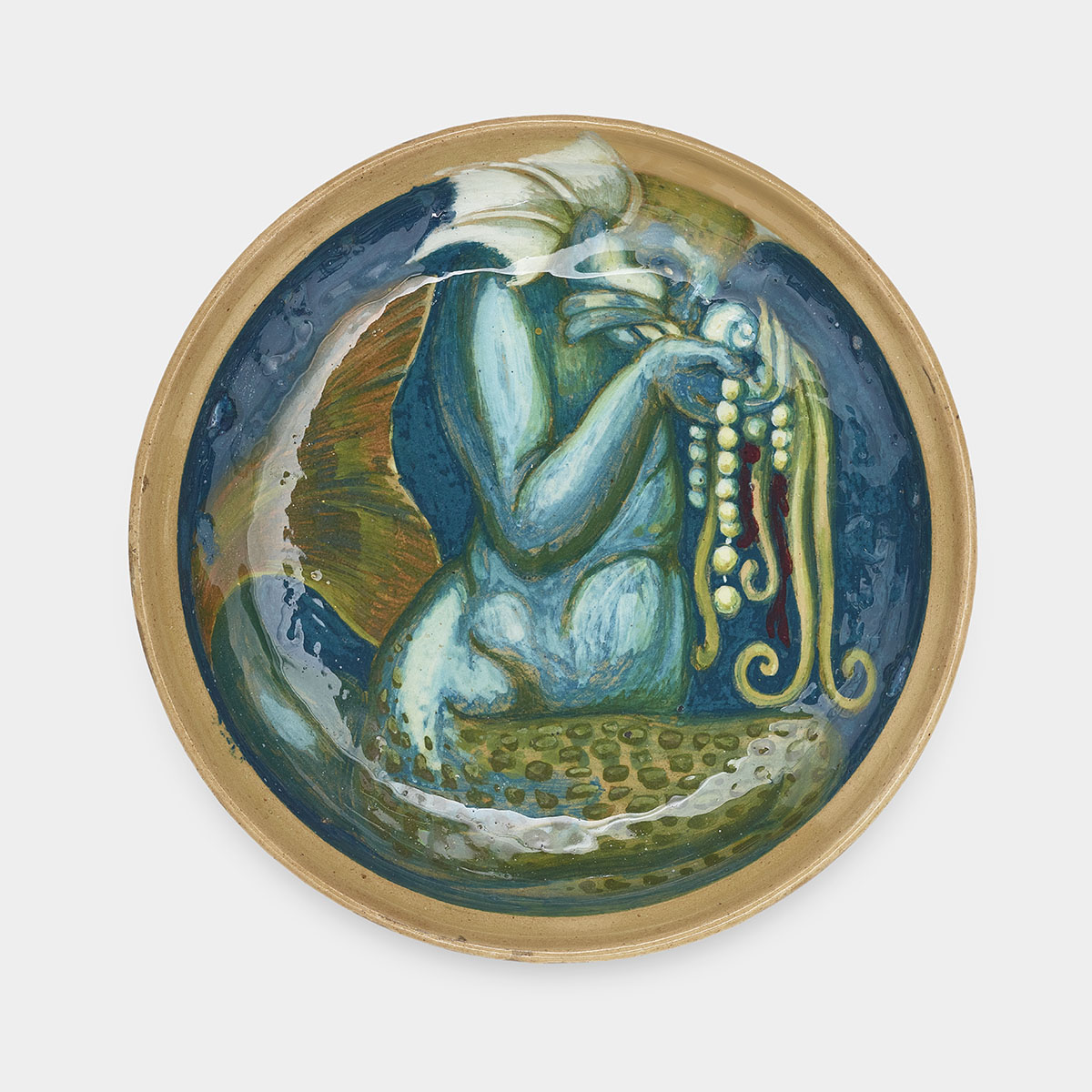
Bowl, 1921
Romeo Berardi (Italian, 1882–1961)
Rome, Italy
Glazed earthenware
The Wolfsonian–FIU, The Mitchell Wolfson, Jr. Collection, XX1989.345
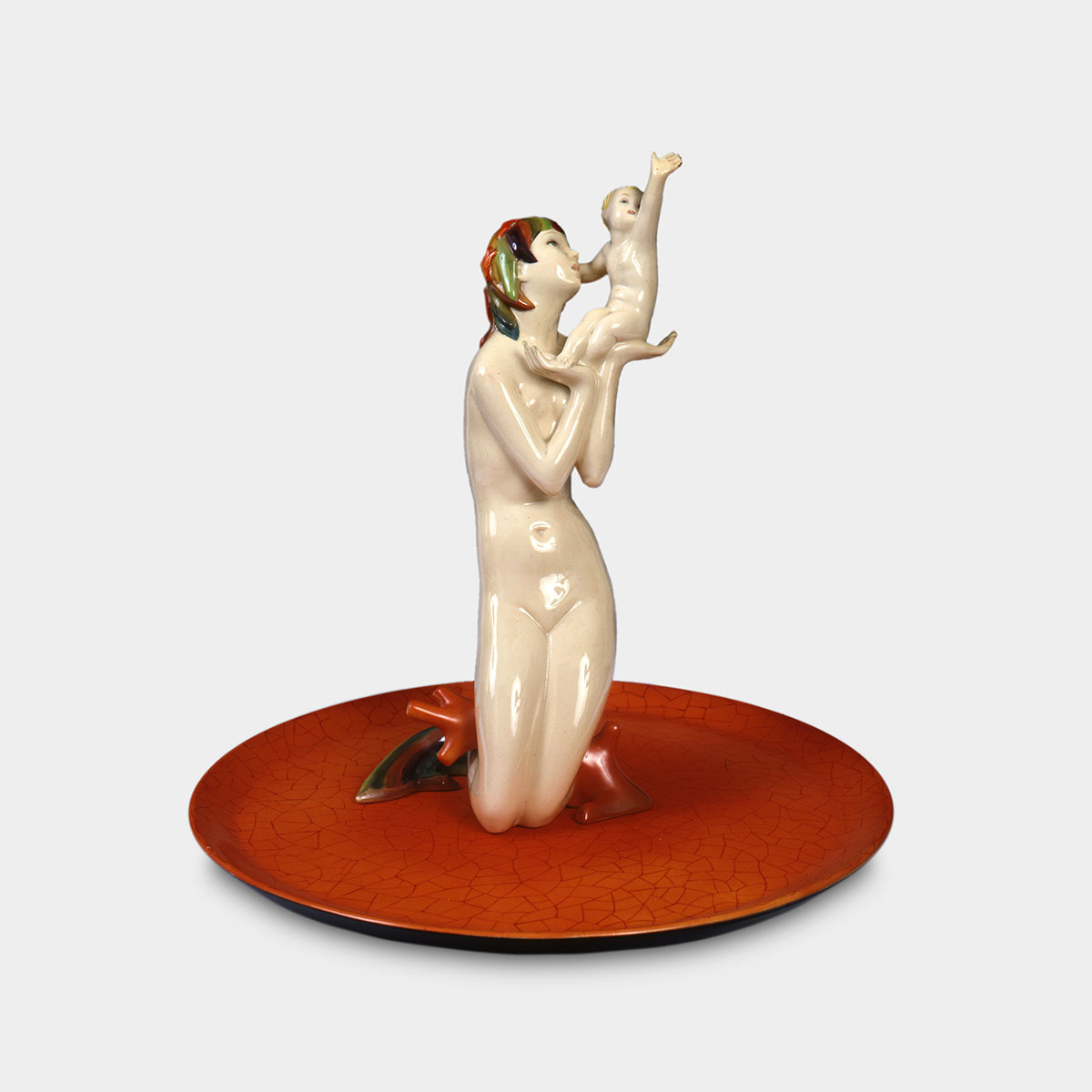
Centerpiece, Mamma sirena su piatto [Mermaid Mother on a Plate], c. 1935
Abele Jacopi (Italian, 1882–1957), designer
Lenci, Turin, Italy, maker
Painted and glazed earthenware
Wolfsoniana–Palazzo Ducale Fondazione Regionale Per la Cultura, Genoa, GX1993.416a,b
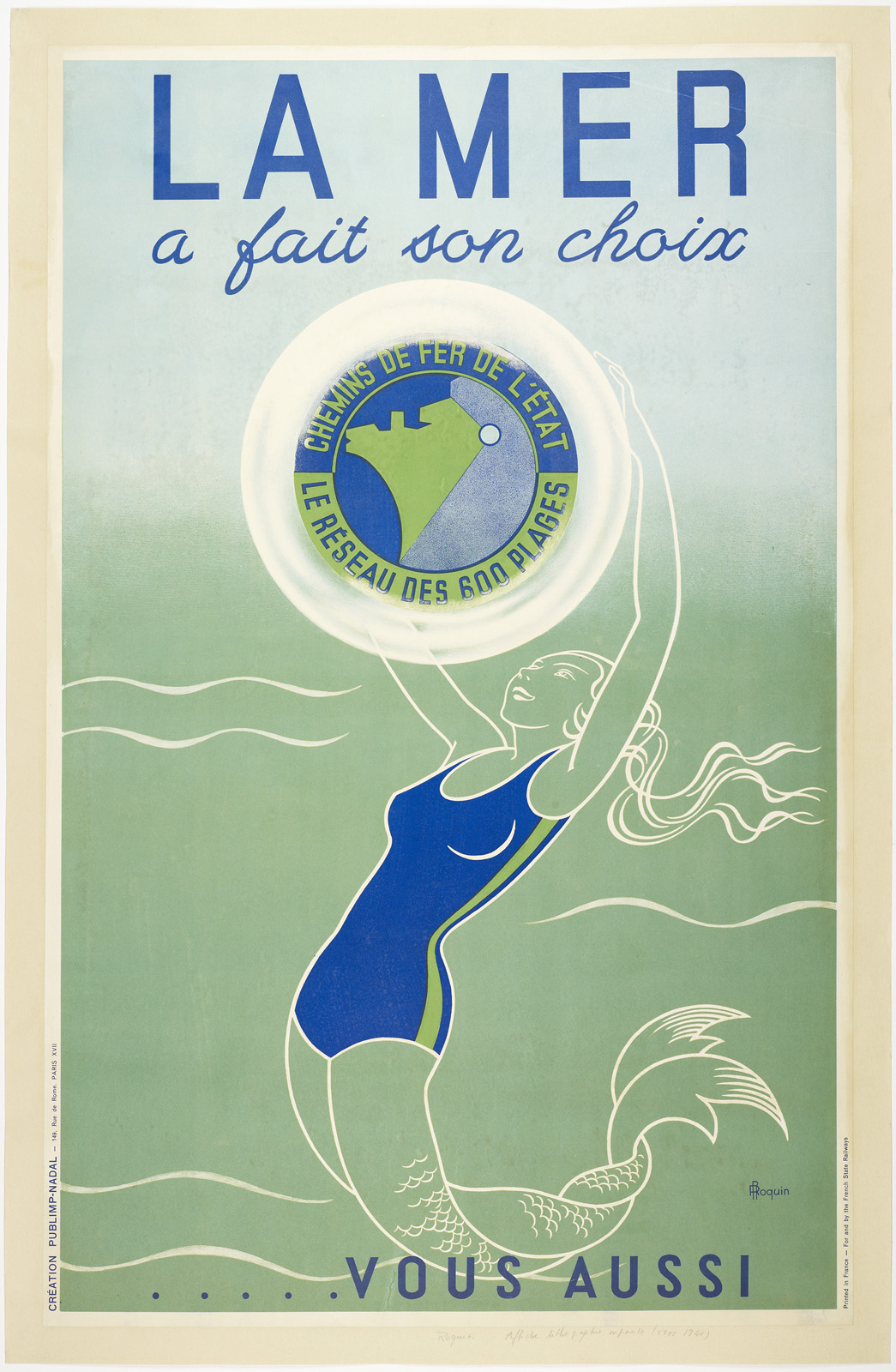
Poster, La mer a fait son choix.... vous aussi [The Sea Has Made Its Choice.... You Also], 1930–39
Robert Roquin (French), designer
Création Publimp-Nadal, for the French State Railways, publisher and printer
Offset color lithograph
The Wolfsonian–FIU, The Mitchell Wolfson, Jr. Collection, TD1991.186.5
Centaurs and Satyrs
Centaurs and satyrs can be traced to ancient Greek and Roman mythology as well. Centaurs are identified by their upper-half human and lower-half horse form. Satyrs, also half-human, became more goat-like in the Roman era, especially as they became conflated with Pan, the god of nature whose human torso, goat legs, and horns resemble those of a faun (another creature similar to satyrs, but with more gentle and innocent traits).
These hoofed beings embody the human tension between our civilized and animalistic tendencies. Centaurs are seen as more impulsive, quick to anger, and prone to indulgence. This is represented in a medallion depicting a centaur carrying an overflowing cornucopia of berries or some kind of fruit. Satyrs, similarly, are lustful creatures but also wise and highly intelligent.
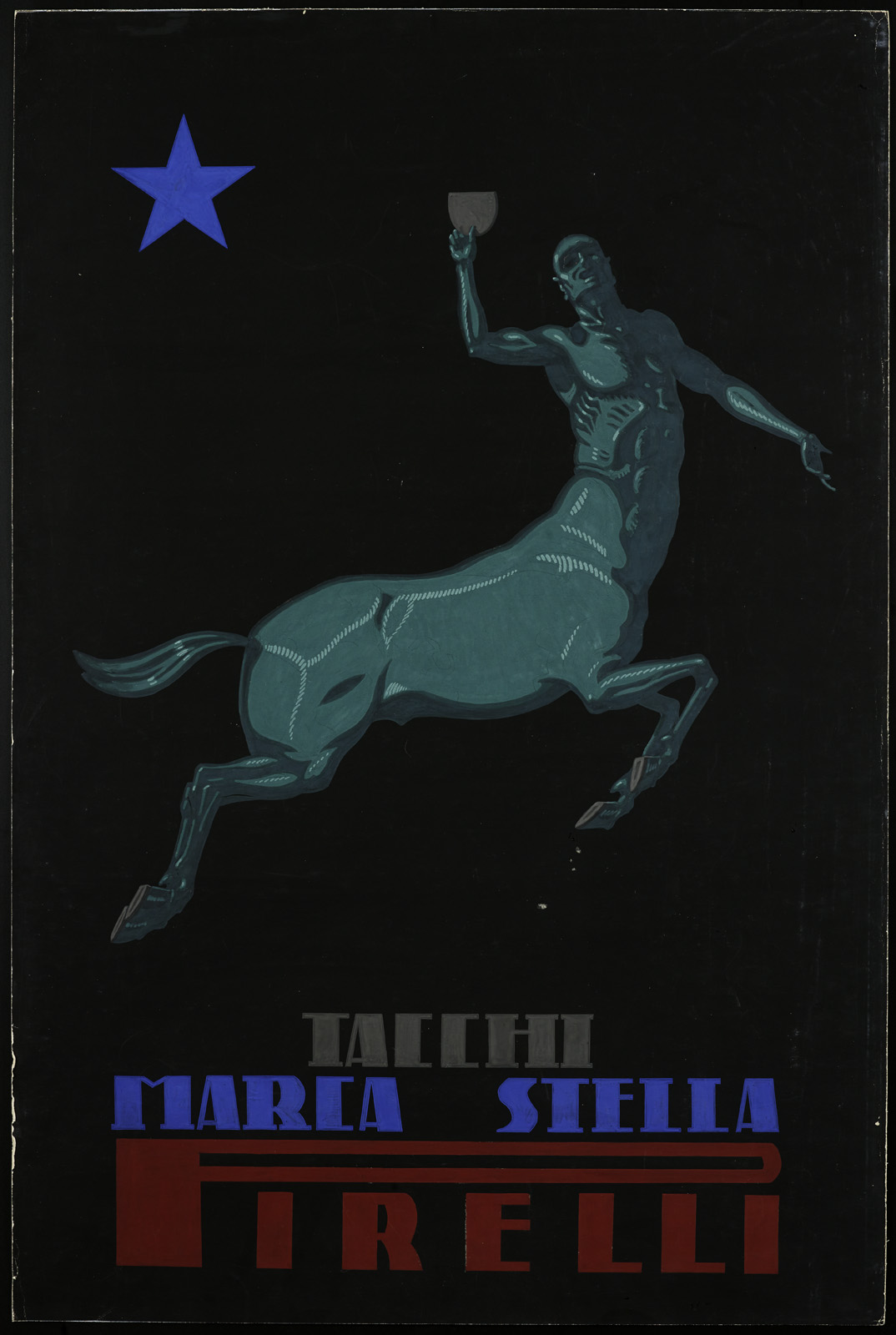
Design drawing, Tacchi Marca Stella Pirelli [Pirelli Star Brand Heels], c. 1930
Studio Tytan, Trieste, Italy, designer
Gouache and graphite on paper
The Wolfsonian–FIU, The Mitchell Wolfson, Jr. Collection, XX1990.3277
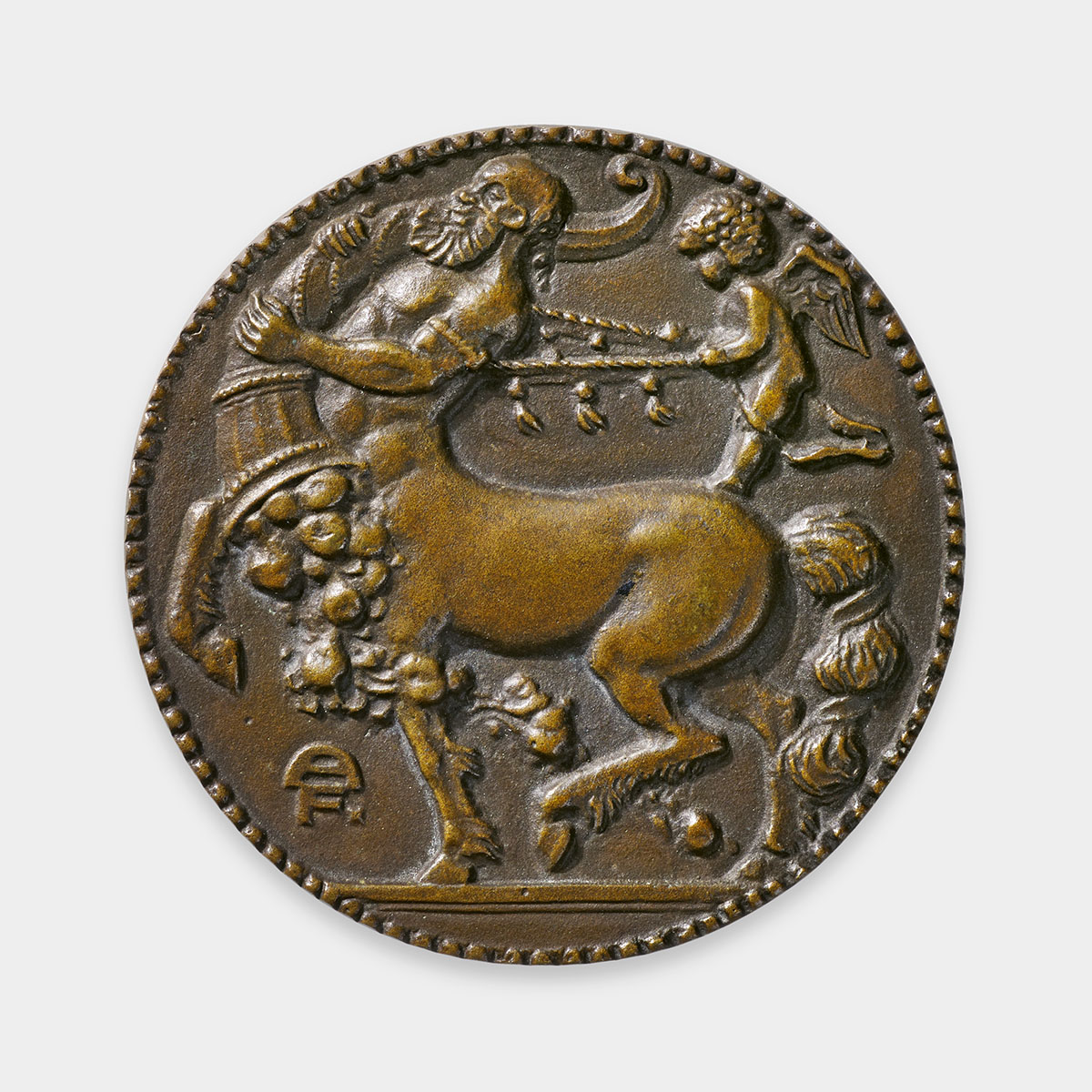
Medal, c. 1915
Alfons Feuerle (German, 1885–1968), designer
Carl Poellath, Schrobenhausen, Germany, maker
Bronze
The Wolfsonian–FIU, The Mitchell Wolfson, Jr. Collection, 86.1.341
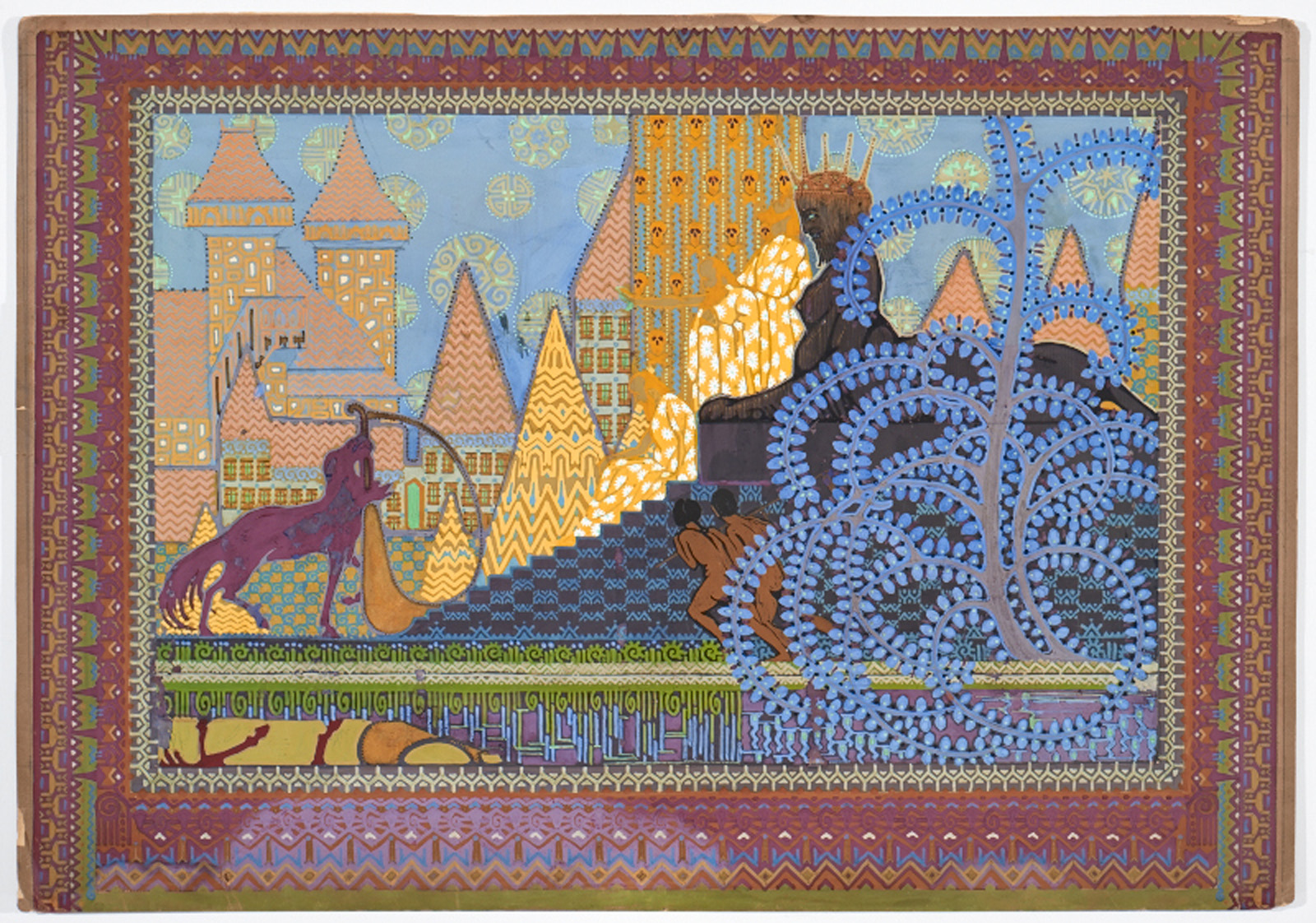 Painting, Sphinx, 1912
Álmos Jaschik (Hungarian, 1885–1950)
Budapest, Hungary
Gouache and graphite on paperboard
The Wolfsonian–FIU, The Mitchell Wolfson, Jr. Collection, TD1992.51
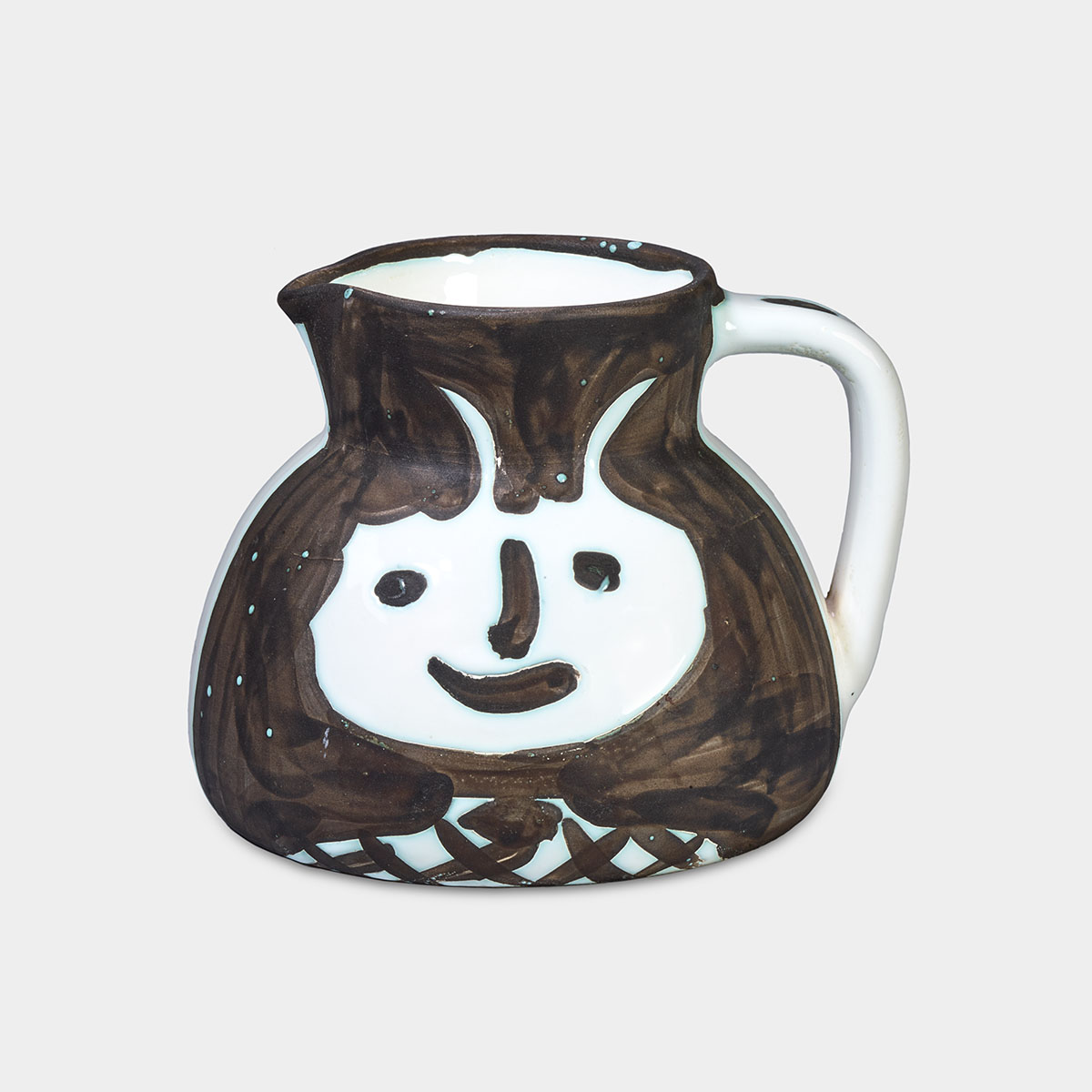
Pitcher, Têtes [Heads], 1956
Pablo Picasso (Spanish, 1881–1973), designer
Atelier Madoura, Vallauris, France, manufacturer
Glazed earthenware, oxidized paraffin, enamel
The Wolfsonian–FIU, The Mitchell Wolfson, Jr. Collection, 85.7.214
Unicorns
Among the most popular mythical creatures, the unicorn is universally beloved. Known for its rarity, the unicorn today symbolizes uniqueness and sought-after success. Even the earliest recorded accounts of unicorns in ancient Greek and Babylonian societies perceived the unicorn in a positive light—standing for mysticism, magic, health, and purity, with its horn believed to possess incredible healing powers. Unicorns, along with winged flying horses, appear in several sacred accounts, including the Old Testament and the Prophet Muhammad's Night Journey, which describes the prophet's ride on a winged horse-like creature with wings. In medieval times, the unicorn became an allegory for Christ, often depicted surrounded by pure virgins, who were said to be the only ones capable of luring the elusive beasts.
Scotland adopted the unicorn symbol around the 12th century, embracing a legend suggesting that only a king could capture a unicorn. Scottish nobility claimed the creature as a symbol of purity and power, reproducing the unicorn on coins and coats of arms. Since then, it has become the country's national animal. The unicorn pairs with a lion on the United Kingdom's coat of arms, which is pictured on a brochure for the British Pavilion at the New York World's Fair in 1939, with the unicorn representing Scotland and the lion representing England on the opposite side.
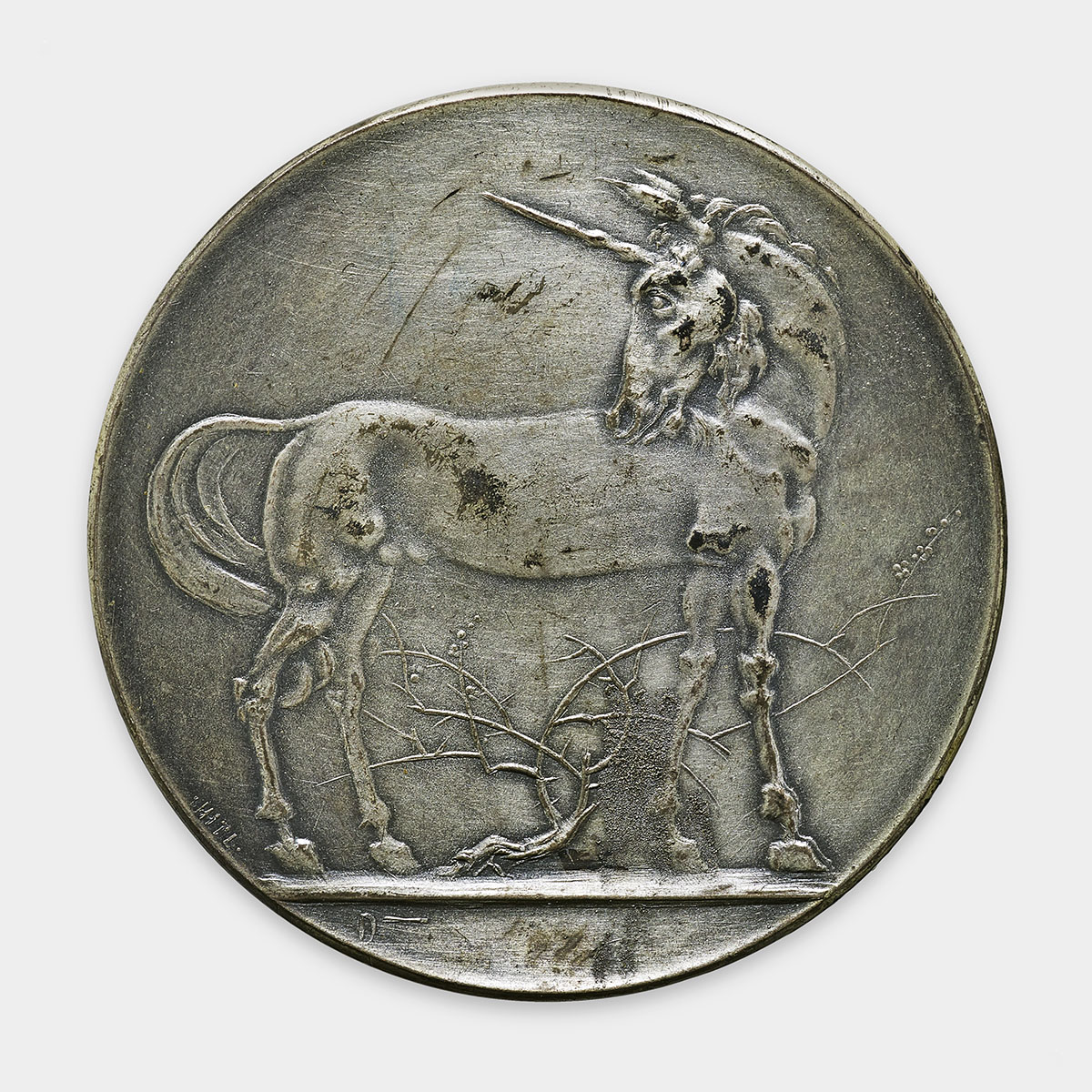
Medal, 1905
Maximilian Dasio (German, 1865–1954), designer
Carl Poellath, Schrobenhausen, Germany, maker
Silver
The Wolfsonian–FIU, The Mitchell Wolfson, Jr. Collection, 86.1.153
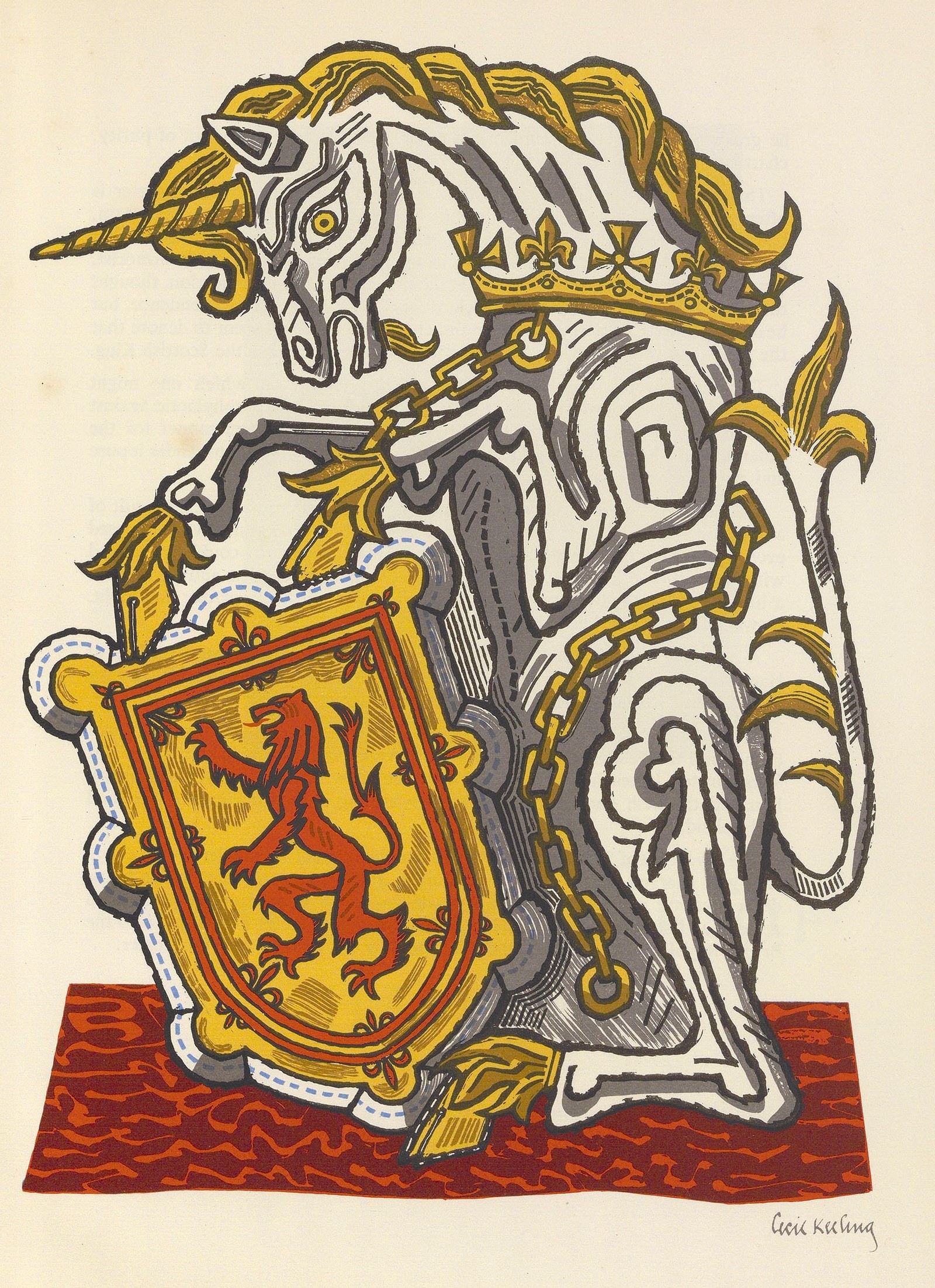
Illustration, from The Queen's Beasts, 1953
Cecil Keeling (British, 1912–1976), illustrator
Newman Neame, Limited, London, England, publisher
The Wolfsonian–FIU, The Mitchell Wolfson, Jr. Collection, 85.2.109
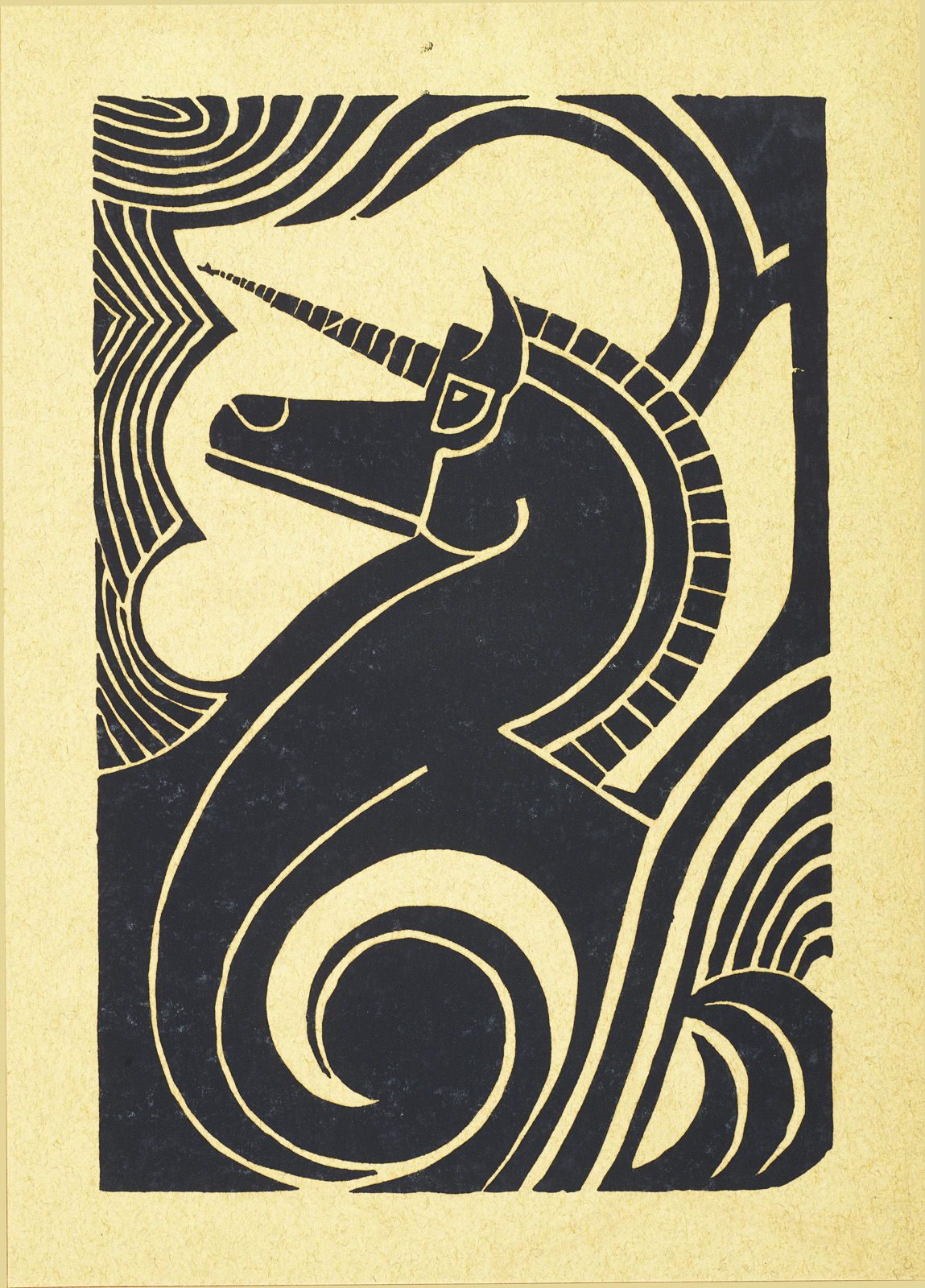
Illustration, from The Kangaroo and Others Too, 1939
George Verdack, Emily Jurczak, Donald Stuart, editors
Steinmetz High School, Chicago, Illinois, publisher
The Wolfsonian–FIU, The Mitchell Wolfson, Jr. Collection, XB1990.314
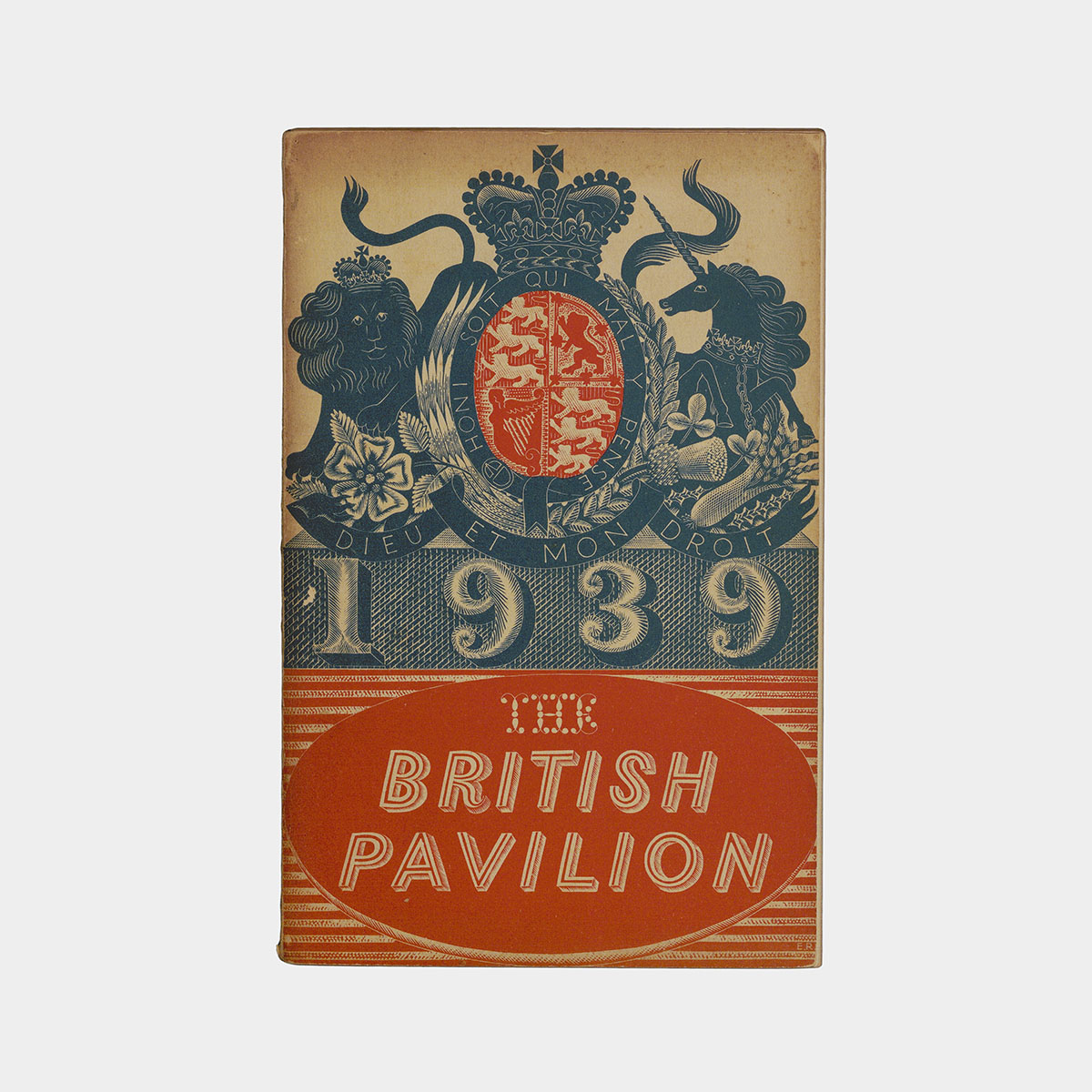
Book, Guide to the Pavilion of the United Kingdom, Australia, New Zealand and the British Colonial Empire, 1939
Eric Ravilious (British, 1903–1942), cover illustrator
The Wolfsonian–FIU, The Mitchell Wolfson, Jr. Collection, XC1991.801
Phoenixes and Firebirds
The phoenix is often a symbol of renewal, endings and beginnings, death and rebirth. Appearing first in Ancient Greek and Egyptian mythology, the phoenix was associated with the sun. At the end of the phoenix's life cycle, its nest would ignite in flames in the heat of the sun's rays, and a new phoenix would be born from the ashes. If you're familiar with the Harry Potter series, you'll remember the famed wizard Dumbledore's phoenix, Fawkes, as a benevolent bird that comes to Harry's aid multiple times in the throes of danger, marking the end of a story arc and the beginning of a new adventure.
The firebird, a similar, yet distinct legendary creature, is rooted in Russian folklore. The dazzling ballet The Firebird (L'oiseau de feu) by Russian composer Igor Stravinski, which debuted in Paris in the 1910s with Sergei Diaghilev's Ballets Russes, popularized a fairytale about a firebird with flame-like feathers and magical powers. In the story, the firebird saves the protagonist in gratitude for sparing its life on a hunting trip. This ballet, along with other tales of the firebird from the time, likely inspired René Lalique's glass centerpiece, featuring an elegant female figure with an enormous plume and wings that evokes the mythical bird.
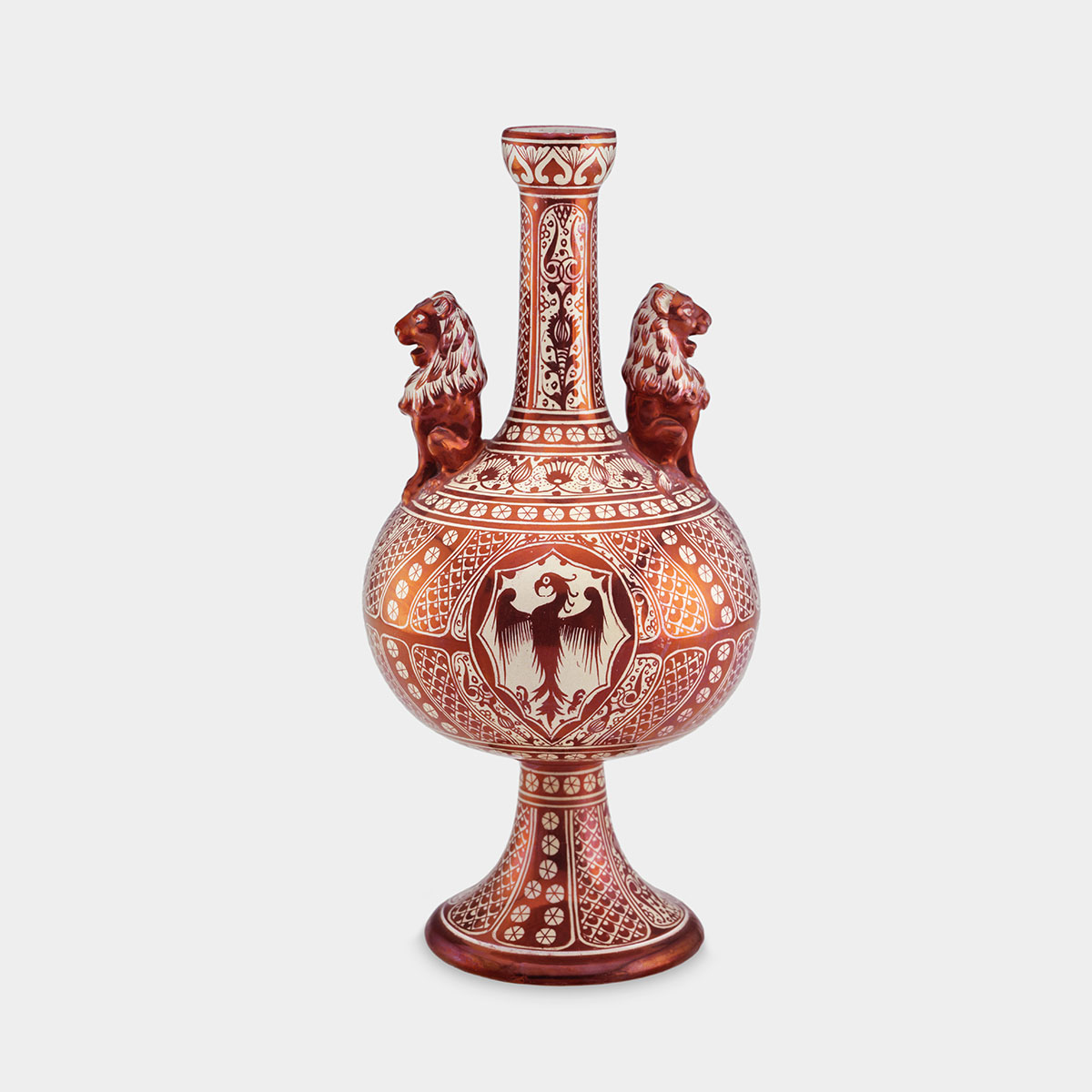
Vase, c. 1890
William De Morgan (British, 1839–1917), designer
Ulisse Cantagalli (Italian, 1839–1901), maker
Glazed earthenware, luster
The Wolfsonian–FIU, The Mitchell Wolfson, Jr. Collection, 85.7.46
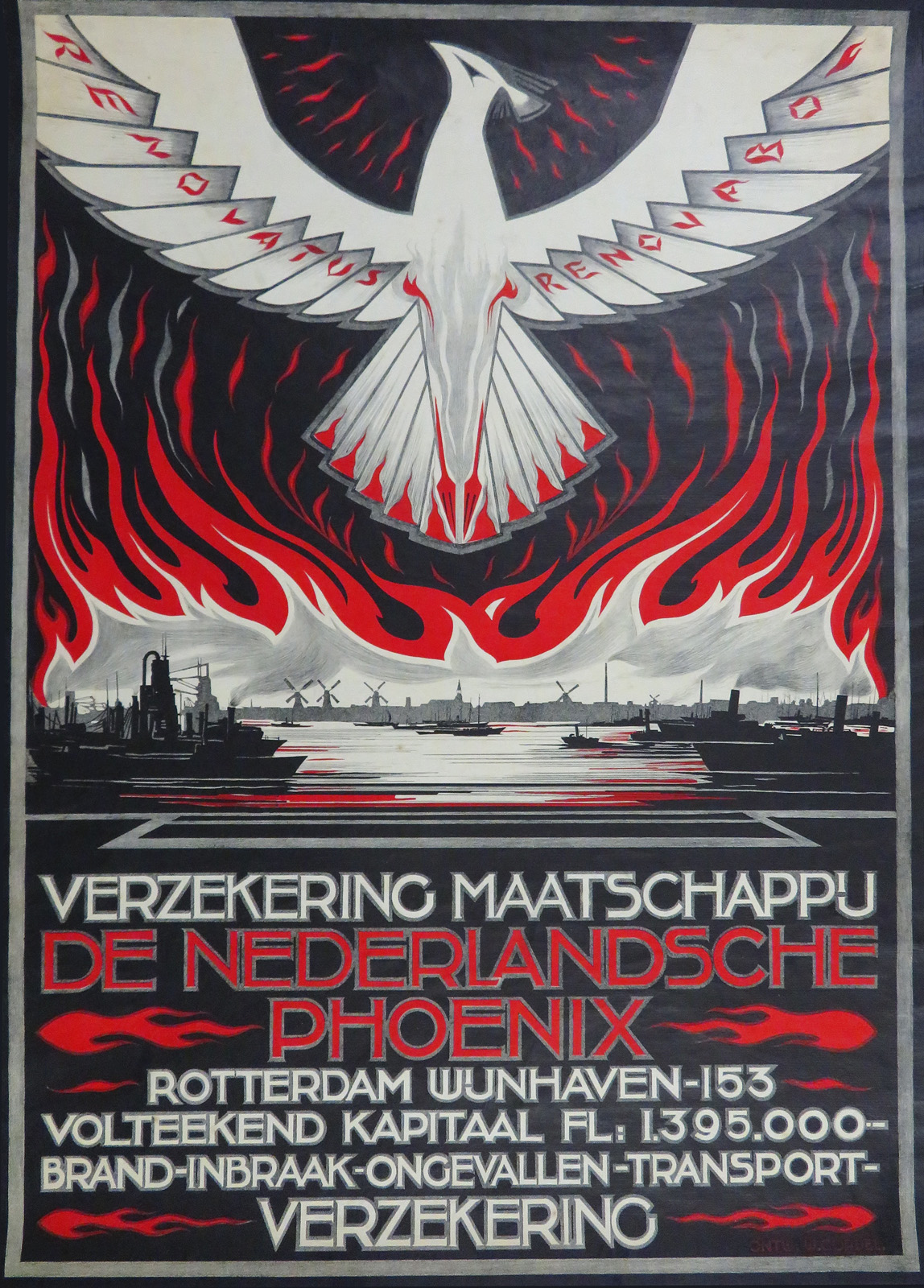 Poster, De Nederlandsche Phoenix, c. 1925
Rotterdam, The Netherlands
Offset color lithograph
The Wolfsonian–FIU, The Mitchell Wolfson, Jr. Collection, XX1990.2800
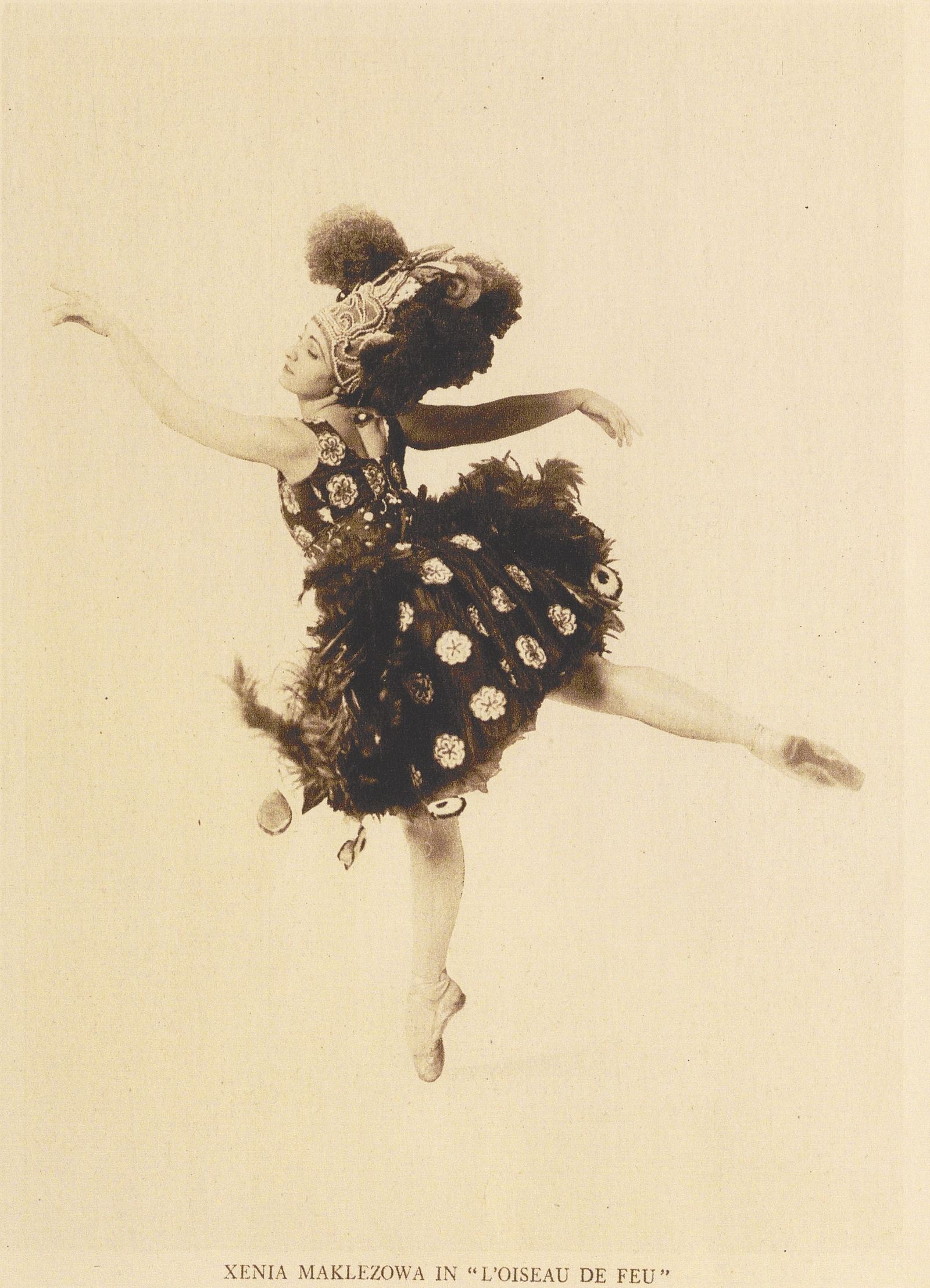
Illustration (detail), "Xenia Maklezowa in 'L'oiseau de feu'," from Serge de Diaghileff's Ballet Russe, 1916
Metropolitan Ballet Company, Inc., New York City, publisher
The Sackett & Wilhelms Company, Brooklyn, New York, printer
The Wolfsonian–FIU, The Mitchell Wolfson, Jr. Collection of Decorative and Propaganda Arts, Promised Gift, WC2002.5.3.51.1
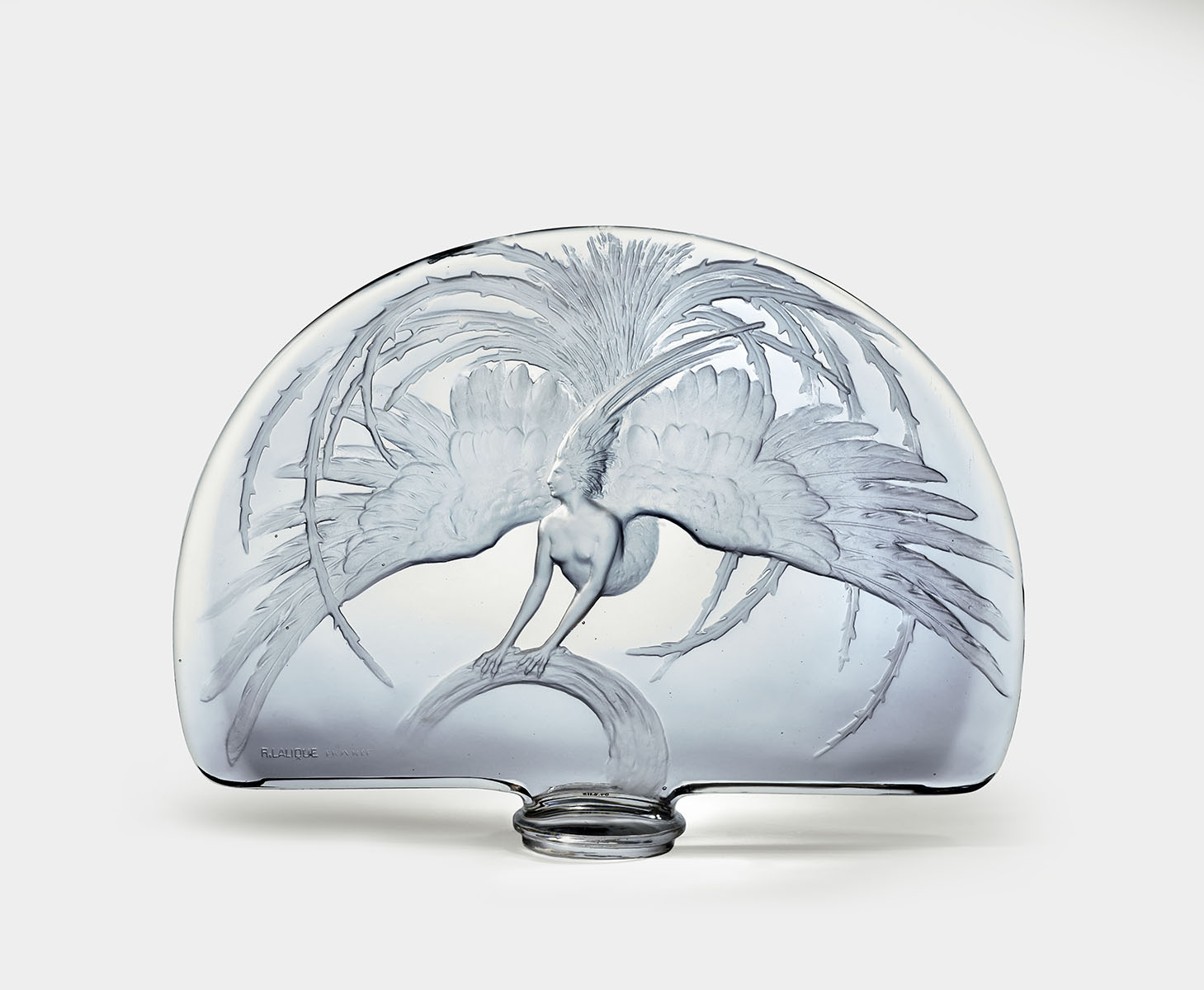
Centerpiece, Oiseau de feu [Firebird], c. 1925
René Lalique (French, 1860–1945), designer
SARL René Lalique & Cie, Wingen-Sur-Moder, France, manufacturer
Glass
The Wolfsonian–FIU, The Mitchell Wolfson, Jr. Collection, 84.8.113
Want to see more? Catch a sneak peek of objects that will be on display during our October programs!